

By Nadège Gaultier — Founder of Confiture Parisienne
Nobody makes jam in Paris. That's what everyone told us when we started. Jam is a countryside thing, orchards in Provence, farmhouses in the Dordogne, grandmothers stirring copper pots over wood-burning stoves. Paris is croissants and restaurants and concrete. Not fruit preserves.
Except that Paris was once one of the great fruit cities of Europe. And that story, almost no one tells anymore.
A forgotten history
In the Middle Ages, the Marais district, now famous for its galleries and boutiques, was exactly what its name suggests: marshland. Fertile, flooded by the Seine, covered in walled gardens where peaches, pears, cherries and gooseberries grew inside the city walls. Paris fed itself.
By the 17th century, Montreuil, then a village on the outskirts, had become the peach capital of Europe. Its espalier walls, angled to capture heat and protect blossoms from frost, produced fruit so exceptional that it was served at Versailles and exported to the courts of London and Saint Petersburg. The technique was so refined that it became a reference in horticultural science.
And where there is fruit, there is jam. Parisian confituriers were known across Europe. Sugar, imported through the colonial trade, arrived at the ports and flowed into the capital's workshops. Jam-making was a Parisian craft, as much as pastry, as much as bread.
Then the city grew. The orchards disappeared under stone and asphalt. Jam production moved south, closer to the fruit basins, the Rhône Valley, the Southwest. By the 20th century, jam had become a supermarket product, manufactured in factories far from Paris. The city consumed, but no longer made.
2015: an improbable beginning
When we founded Confiture Parisienne in 2015, the idea seemed almost absurd. Making artisanal jam in a city where a square metre costs what it costs, where logistics are a puzzle, where no fruit has grown for a century?
That tension was precisely the point. Making jam in Paris again meant reconnecting with a craft the city had lost. It meant putting a copper cauldron back where there had been one three centuries ago.
We set up our workshop beneath the arches of the Viaduc des Arts, at 17 avenue Daumesnil in the 12th arrondissement, a 19th-century railway viaduct converted into artisan workshops. The space is glass-fronted: anyone walking past can watch the jam being made. That transparency is not a marketing choice. It is a statement about how we work.
What we actually do
Every batch is cooked in copper basins, not stainless steel vats, not industrial vacuum cookers. Copper, because it conducts heat evenly and because the metal interacts with the natural pectin in fruit, producing a firmer, brighter, more flavourful set. The science behind this is well documented, but confituriers have known it instinctively for centuries.
We cook in small quantities, a few kilograms at a time. This is the only way to control the cooking precisely: to watch the texture, to judge the colour, to pull the basin off the heat at the right second. It cannot be automated. It requires someone standing there, paying attention.
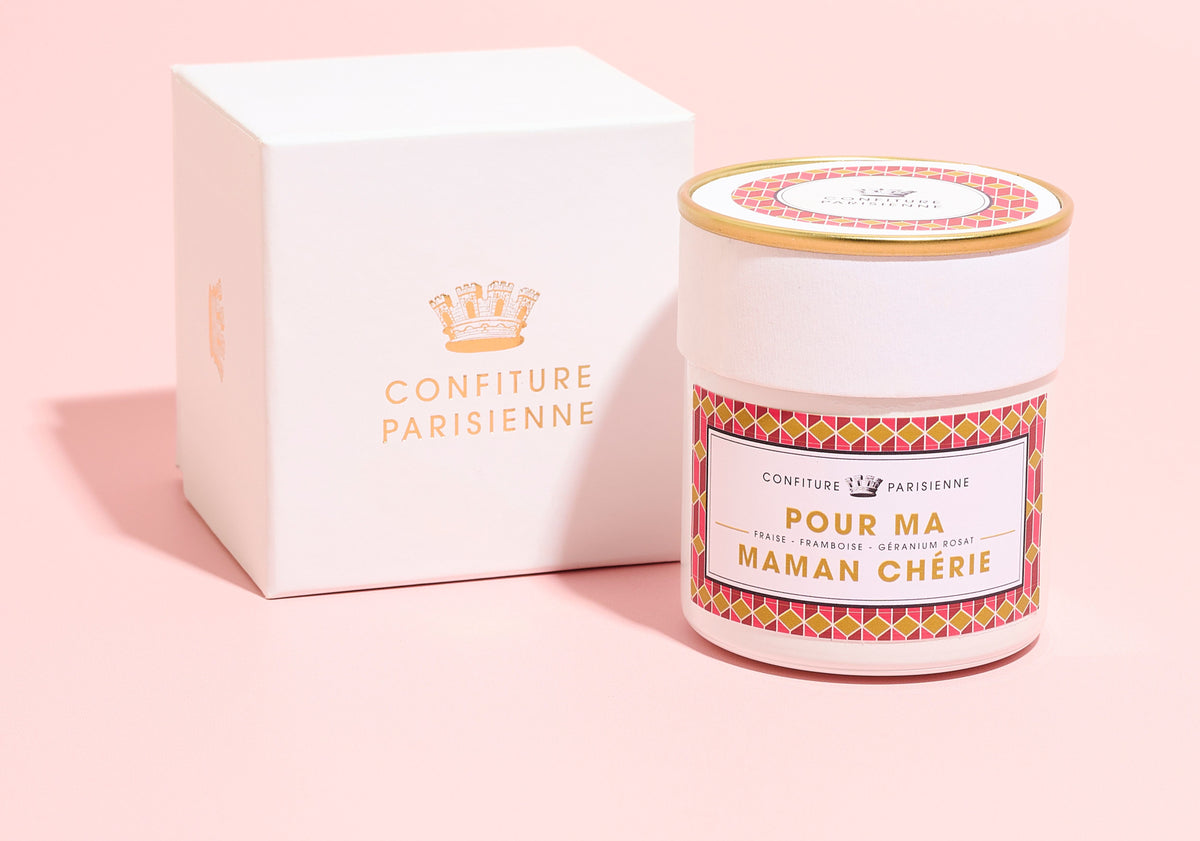
Our fruits are selected at peak season. We use unrefined cane sugar. No additives, no preservatives, no colouring. A minimum of 65% fruit in every jar, well above the regulatory threshold. The white-lacquered jars are designed to protect the contents from light and preserve flavour over time.
The recipes are what set us apart. We make the classics, apricot, strawberry, raspberry, but also unexpected combinations: Raspberry Rose, Four Citrus with spices, Orange Vanilla, Strawberry Poppy inspired by Monet's paintings, Chestnut Pear for winter, Cherry Smoked Tea for cheese pairings. Each recipe is a composition, a balance of acidity, sweetness, texture and aroma that tells a story.
Recognition
In 2016, Confiture Parisienne was admitted to the Collège Culinaire de France, an institution founded by some of the most recognised chefs in the country to identify and support artisan producers of exceptional quality. The selection is made by a committee of peers. It meant that what we were doing was considered serious craftsmanship, not a novelty.
We are referenced by Gault&Millau, France's most respected culinary guide alongside Michelin, and listed on TasteAtlas, the international food atlas, among the notable jam producers in France. Our jams are available at La Grande Épicerie de Paris, the official Eiffel Tower shop, and through select retailers internationally, including Gump's in San Francisco, FrenchWink, and Beautyhabit in the United States.
Why it matters
There are thousands of jam brands in France. Most are industrial. Some are artisanal but rural. What makes Confiture Parisienne different is not just the method, it is the conviction that jam can be something more than a breakfast condiment.
A jar of jam can carry a story. It can reference a painting, evoke a season, pair with a cheese or a cocktail, become a gift that someone opens on a quiet morning three months later and thinks of the person who gave it to them. That is what we make: not just preserves, but a form of edible culture.
We are the only artisanal jam workshop operating in Paris today. We cook every day beneath the Viaduc des Arts, in copper basins, by hand. The city that forgot it knew how to make jam is making jam again.
Confiture Parisienne — 17 avenue Daumesnil, Paris 12th — Viaduc des Arts. Artisanal jams cooked in copper basins, no additives, no preservatives, 65% minimum fruit.